Winterboer Agile Analytics

  • Services
    • Training
    • Consulting
  • About
    • Lynn Winterboer
    • Chad Winterboer
    • Joe Bernardini
    • Katrina Starkweather
  • Testimonials
  • Events
  • Blog
  • Contact

August 11, 2016 by Lynn Winterboer 1 Comment

Three Trademarks of a Good Agile Business Intelligence Coach

What BI Teams Need in an Agile Coach

by Lynn Winterboer Agile Analytics Educator & Coach

Reprinted with permission from Media 1105, Inc. Originally published April 7, 2016 – TDWI Flashpoint Article

Working in Agile Data Warehousing (DW) and Business Intelligence (BI) over many years, I’ve worked with a lot of teams and coaches.  There are three hallmarks of a good Agile BI coach that teams should consider when looking for a coach.

1. A good Agile BI coach understands the unique challenges faced by BI teams.

Agile coaches accustomed to working with software development teams (e.g., Web or mobile) often struggle to get their points across when coaching BI teams. The biggest hurdle is the difference in semantics. Although a Web team, for example, might refer to the regular movement of data from one place to another as an API (application programming interface), the BI industry refers to this function as ETL (extract, transform, and load). Coaches who have a deep repertoire of software examples to illustrate Agile concepts to their teams will find that many of their examples will frustrate the BI teams because of the disconnect between the Web/mobile examples and the daily data-focused work of the BI team. What’s more, without understanding the various aspects of BI work, it’s difficult for a coach to understand and answer questions.

2. A good Agile coach prevents BI teams from making exceptions.

The strongest coaches I’ve seen excel at helping teams “hold the Agile process.” They help their teams resist the temptation to make exceptions. A BI team with multiple stakeholders, specialized tools and related skill sets, and large volumes of data certainly faces more challenges than other IT teams. I can understand why it’s tempting to say, “We’re different, and therefore we can’t adhere to [Agile value here].” A good coach, however, will help the team think this through and find ways to adhere to the core values and principles of an Agile approach.

For instance, many BI teams don’t think it’s possible to frequently deliver working BI results for business review and feedback. Yet, a coach who understands the BI value chain—from source system all the way through to reports and dashboards—can help the team break the work effort into smaller, testable pieces of functionality that the business can review every few weeks.

3. A good Agile coach will ensure testing at the beginning of the project.

I’ve seen data teams try to develop a “mini waterfall” within each iteration, leaving all testing of functionality to the end. This practice shortchanges the testing activities (just as it does in a traditional waterfall process), and it goes against the grain of the Agile principle of continuous attention to technical excellence. It’s very difficult to deliver technically excellent code when it hasn’t been well tested. A good Agile coach will help the team understand how to start thinking about testing from the very start, as well as how to finish the higher-priority functionality, including testing, before starting work on the next-in-line priority.

Conclusion

Many BI teams recognize the value their software development colleagues are getting from using Agile approaches to their work. They want that experience for themselves, but they need the right coaching to help them on their journey. Among other talents, a good Agile coach will understand BI challenges and semantics; keep the team from making exceptions to any of the core principles of Agile; and ensure the team focuses on testing from the beginning of each development effort.

TDWI logoThe Data Warehouse Institute, www.tdwi.org TDWI Is Your Source for In-Depth Education and Research on All Things Data. For 20 years, TDWI has been helping data professionals get smarter so the companies they work for can innovate and grow faster. TDWI Flashpoint is a regular publication for TDWI members that provides tips, techniques and critical research in BI and DW.

Filed Under: Articles, Favorites, TDWI Tagged With: Agile Transformation, Agile Values and Principles, Beginners, Testing

July 7, 2016 by Lynn Winterboer 3 Comments

What’s Hot at Agile 2016

Agile 2016 | July 25 – 29 Atlanta, GA

What’s hot besides the weather? The Agile 2016 program!

Wow – The Agile 2016 program has been announced and there are SO MANY good sessions it will be hard to choose what to attend! Four of us from Winterboer Agile Analytics are attending, and will be splitting up to participate in as many sessions as we can. Since I was going through the full program to decide where to spend my time, I decided to capture some notes and share them with you, in case it helps you decide how to spend your time at Agile 2016! Sessions we are looking to attend or can recommend to others:

Starting with Monday, July 25:

Learning from Bad Examples – Readability and Python (Bryan Beecham, Tim Ottinger)
Bryan and Tim are always entertaining and very smart – and I learn a lot from every interaction with them. When I first met Bryan at a shared client last year and learned he was really into XP technical practices, I told him all about a great session on pair programming I’d seen at RallyON 2013 – and it turns out it was HIM AND TIM who led that session!!! He’d worn a hat at RallyON and wasn’t wearing a hat when I met him – that’s my excuse for not recognizing him 😉

Building the Business Case for DevOps (Kathryn Kuhn, Christine Hudson)
DevOps practices and technologies are incredibly important for agile enablement, and all require a business case for funding and support.

Agile in name only: It’s not a problem, it’s a solution (Matthew Carlson)
Decoupling is “where the vocabularies of agile were used but inspection and adaptation were hollow” and how “…decoupling is actually a solution to underlying conflicts which need to be identified and managed before agile will be accepted.”

Modernizing Government: How Agencies Became Awesome Places to Work using Holacracy & Scrum (Paul Takken, Joe Justice)
Joe Justice is a dynamic speaker who grabbed my attention at Mile High Agile 2013 where he presented on WikiSpeed (if you don’t know what this is you MUST check it out!)

Servant *Learner*ship: Exploring Teacher, Student & Community to grow better Agile Coaches (Lyssa Adkins, Timothy Meyers)
Lyssa’s instruction and mentorship has had a profound impact on my career. This session provides a real-life example of someone growing from ScrumMaster to highly effective agile coach.

Being Agile to become Customer centric (Angel Diaz-Maroto Alvarez)
Anything with “customer centric” in the title will always grab my attention.

Scrabbling To Find A Good Agile Game? Which Should Be Uno On Your List? (Tom Grant)
Tom is my go-to guy for anything related to serious games. He’s a strong presenter with really valuable ideas, and I learn from him every chance I get.

A Millennial’s Perspective on Software Craftsmanship (Ajay Fewell, Jesse Fewell)
Brilliant idea for a session! Jesse is a smart dude, and I’m sure this will be a strong presentation.

Strong-Style Pairing (Llewellyn Falco, Maaret Pyhäjärvi)
I know Llewellyn as a champion of pair-programming and look forward to seeing how he and Maaret guide team members in this important practice.

Deploying a Data-Centric Approach to Enterprise Agility (Jorgen Hesselberg, Rajan Seriampalayam)
Okay, so it has the word “data” in the title – of course that got my attention. Beyond that, I’ve seen some strong agility in my work with Intel and I want to know more about how they measure their agile journey. I am also curious to ask them about avoiding undesired behavior based on what they measure – I’ve seen lots of teams do unproductive backflips to make their measurements look good, all the while countering the intention of an agile practice.

How to be Agile in Non-IT Organizations – Breaking the Software Constraint (Jake Calabrese)
I’ve known Jake for a long time. He’s dynamic, intelligent, and highly entertaining. I love that “Agile” is moving beyond IT and into the broader world.

My Own Personal Leanness (Catherine Swetel)
Personal Kanban literally changed my life, helping me become happier, calmer, and more productive.

Everything is important RIGHT NOW! How do I determine a Minimum Viable Product? (Jenny Swan, Amanda Tygart)
“This workshop will give the tools for any team, using any methodology, and at any maturity level, to discuss Minimum Viable Product.”

Critically Thinking Your Design DNA (Kupe Kupersmith)
Kupe Kupersmith gave a wonderful presentation on product ownership some years ago, and I have kept my eyes peeled for more of his work since then.

Introduction to Agile Testing: Everyone Owns Quality (Matthew Heusser)
Such an important topic.

Insights and Connections: Using Sense Making to Think & Decide in Uncertainty (Lynne Cazaly)
Lynne led a great session years ago on visual note-taking and I’ve been a subscriber to her newsletter ever since. I really enjoy the way she thinks and expresses ideas.

The Agile Database Techniques Stack: Bridging the Agile/Data Cultural Divide (Scott Ambler)
It’s SCOTT AMBLER! I always make a point of going to his sessions, and this one will be particularly interesting: “Data is the lifeblood of our organizations, supporting real-time business processes and decision making. It is crucial to the success of software development, and to our organization as a whole, that we apply agile and lean strategies to data-oriented activities.”

#StopTheMimimi: from victim to protagonist (Erica Briones Graciano)
We often run into teams, and leaders especially, who want the benefits of Agile without really changing anything. This session speaks to that issue: “The reality is, if you need ideal conditions to apply your principles, they aren’t principles, they are conveniences. Change happens from inside out, examples speak louder than words, the agile culture fosters protagonists, not victims. If you believe that the agile way is the path to follow, then the question you should ask yourself is: how can I make it happen?”

Leadership is an Extreme Sport (Em Campbell-Pretty)
If you are, or want to be, an Agile leader, then you NEED to follow Em Campbell-Pretty. The ideas she shares are based on her own deep experience, as well as an amazing amount of personal research. I first met Em in Boulder, CO in 2013 – I was walking down the street and saw a woman half a block ahead of me wearing a shirt with “World’s Best Agile Data Warehousing Team” on the back! I ran to catch up to her, and insisted that we should know each other. After she got over the shock of practically being tackled on a street in a foreign country (Em is from Australia), she graciously agreed to have lunch the next day. Her RallyON presentation was fantastic and set the standard for agile data warehousing team transformations going forward.

Agile Testing Maturity – What does “Good” Look Like? (Bob Galen)
Bob’s sessions tend to be full of good examples and concrete ideas for taking the next step in your agile journey.

You Can’t Fix What You Can’t See: Visualizations that Spark Conversation and Change (David Hussman)
Ever since I first met David at the Intel Agile Lean Conference in 2013 I have enjoyed his sessions and find I come away with a completely new way of looking at things. He’s very entertaining, too!

Scaling Without Frameworks – Ultimate Software Experience Report (Prateek Singh, Daniel Vacanti)
I’m not only a huge fan of Daniel Vacanti’s work, but also of Kanban as both an agile practice and a way to run a successful company. This case study of how this company has leveraged Kanban will be fascinating. “Ultimate has been on “Fortune’s 25 Best Companies to Work For” list for the past 5 years and was named “#1 Best Company to Work For in Tech” this year.”

Didn’t I say there are a lot of amazing sessions this year at Agile 2016? I’ve only covered Monday’s sessions! My next post will cover all of the Agile 2016 events scheduled for Tuesday, July 26. If you aren’t already subscribed to my blog, sign up now!

Q: Which events are you attending? Do you want to connect? Tweet me @agilelynn and let’s connect.
Q: Which events do you recommend and why?

UPDATE:

Done! Check out the lineup for Tuesday, July 26 @ Agile 2016.

Filed Under: Blogs, Favorites, Review Tagged With: Agile Transformation, Beginners, Business Value, Coaching

June 21, 2016 by Lynn Winterboer Leave a Comment

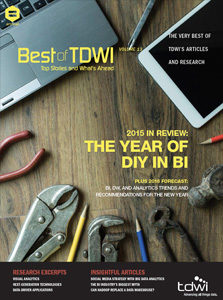
Best of TDWI – Second Year

Best of TDWI, Volume 13

TDWI BOTDWI 2015The Year of DIY in BI

My TDWI Flashpoint article, “Kanban for Newly Agile Data Warehouse and Business Intelligence Teams,” was selected for The Data Warehouse Institute’s annual Best of TDWI, Volume 13, which published in mid-February. The Best of TDWI annual digital magazine features the most influential TDWI articles, research summaries, and newsletters from the previous year, as well as TDWI industry expert forecasts for the future of all things data. I am honored; this is my second year in a row to have one of my articles selected for this publication.

From TDWI: Looking Back to Look Forward

As surely as groundhogs predict the weather, February means it’s time for another issue of Best of TDWI: Top Stories and What’s Ahead, our annual compilation of some of TDWI’s best-received and most relevant articles, research, and information about all things data.

The past year saw BI take a step out of IT’s shadow and into the hands of business users with the progress of self-service data prep and engineering. That progress didn’t come without concerns, though, as conversations about good data governance and security in the age of IoT became more prominent.

Kanban for Newly Agile Data Warehouse and Business Intelligence Teams

By Lynn Winterboer

Agile Analytics Educator and Coach

Data teams brand-new to agile typically start by implementing the most popular agile framework, Scrum, hoping to achieve the success they’ve seen from their software brethren. The data warehouse and business intelligence (DW/BI) teams that are most successful with Scrum already have a robust infrastructure. They also have the technical discipline that enables push-button builds, continuous integration, automated testing, and production-quality testing. Continue Reading

Click here to read the Best of TDWI article from 2014, Why Build Architecturally Complete BI User Stories?

The original publication, reprinted with permission from 1105 Media, is located here: TDWI’s Best of TDWI Volume 13

Filed Under: Articles, Blogs, Favorites, Recognition, TDWI Tagged With: Agile Transformation, Beginners, Kanban, Sustainable Practice

July 17, 2014 by Lynn Winterboer Leave a Comment

What is the Role of a BI Analyst in an Agile Project?

How an agile BI Analyst collaborates with the Product Owner and fits into an Agile Team

Below are some questions that came in from a recent webinar my friend, Hubert Smits, and I gave on Acceptance Criteria for Business Intelligence User Stories.

Q: What is the role of a Business System Analyst in Agile?

A: Analysis is an important skill to have on any agile BI team. Business analysis provides detailed insight into the organization’s needs, the calculations and transformations required to meet the needs, and how the users will most benefit from the new feature being developed.  Systems analysis digs into the source systems to find the right data required to fulfill the business needs, and figure out how to best acquire that data into the DW/BI system.  Data analysis provides data quality and integration information that guides some of the most challenging aspects of BI development.

Whether the people exercising these skills have the titles of “BI Analyst” or “Developer” or “Tester” doesn’t matter at all in an agile project.  What is important is that these skills are applied toward completed user stories.  While the people with “Analyst” in their titles are usually the most productive in these skills, there are others in the team who could learn to be effective analysts in order to keep the work flowing.  I’d rather have a developer jump in and do data quality analysis that needs to be done, rather than sitting idle waiting for a development task to be ready for development skills… just as a Business Systems Analyst could help out with testing if that’s the current task needing more hands-on-deck to keep the work moving forward.

__________________________________________________________

Q: “Should a Business Analyst collaborate with the Product Owner?”

A: Absolutely!  Often in BI teams, the Product Owner is juggling relationships with a multitude of organizational departments and won’t have the bandwidth do detailed business, systems, or data analysis on every user story, even to get a story to the point of “ready” for the team to work on it. Many experienced analysts end up in the role of Product Owner, which requires not only their existing analysis skills, but also additional leadership, prioritization, and facilitation skills.  It’s a lot for a single person to take on, and additional help is always required in order for the team to be working on the right things at the right times. Once the team has started working on a story, people doing analysis work on that story will have lots of questions for the PO and other people the PO will bring into the conversation.  Collaboration is required in this key relationship!

__________________________________________________________

Q: How does each role relate to each other and what should be the Business Analyst position vis a vis the entire Agile team?

A: In a healthy agile team, people have skills and desires to learn skills, and don’t focus on titles and roles. The team should be small enough (5 – 9 people) so that you don’t need a title to understand what a person can do to help create working BI features. I mention this because I see lots of teams trying to do “mini waterfalls” in 2-week sprints by having people strictly retain the roles they had in a traditional BI project structure, and then they get frustrated that they aren’t seeing the speed and quality they expected with a change to an agile approach.

Having said that, on a tactical level anyone doing analysis on an agile BI team is a member of the delivery team… as are the people who do data modeling, ETL development, metadata development, report building, testing, etc. That whole group of people works together to deliver working functionality in a short amount of time.  In scrum, there are only 3 official roles: Product Owner (person who identifies and prioritizes the work to be done), Team Member (all the people who do the work to deliver working BI features), and Scrum Master (the person who “holds the process” to keep things moving smoothly so the team members can deliver results as quickly as possible). Therefore, an Analyst is a Team Member and is not separate from the team.

I often hear similar questions, and often the “right” answer for the person asking depends on their organizational constraints and specific situation.  If you would like some help figuring out how business analysts on your BI team “fit” into an agile approach, I’d be happy to have a more targeted conversation!


Hear the webinar in its entirety: Acceptance Criteria

Share Your Questions & Comments!

Filed Under: Blogs, Cutter, Favorites Tagged With: Business Analysts, Collaboration, Cross-Functional Skills, Data Analysts, Definition of Ready, Multiple Business Domains

June 3, 2014 by Lynn Winterboer Leave a Comment

Hard to Find Experienced Product Owners

Why is It So Hard to Find Experienced Product Owners?

Guest Blogger - Lynn Winterboer

I was honored to guest blog recently for Coaching Agile Teams by Lissa Adkins.  Here’s an excerpt of the blog and then a link to her website so you can read the rest of it!

I have noticed a recent increase in the number of recruiters contacting me for Product Owner roles, many of them looking for someone to work with a data-focused team (my area of expertise).  I just chatted with a recruiter looking for an experienced product owner (PO) to work with a healthcare company’s analytics team in the Denver Tech Center area. (Know anyone?) We both bemoaned the fact that there aren’t many experienced POs available in the market, much less any who have a good background in working with data warehousing/business intelligence/analytics. I can imagine other teams struggle to find product owners with the right amount of experience in their industry or business function.

If you are looking to hire product owners for your analytics team, and can’t find the perfect person on the market, I have an idea for you.

Step 1: Find someone who has the right experience as an analytics business analyst and WANTS to work in an Agile framework:

Continued at Coaching Agile Teams…

Filed Under: Agile Coaching Institute, Blogs, Favorites Tagged With: Acceptance Criteria, Agile Values and Principles, Build the RIGHT THING, Business Value, Multiple Business Domains, Organization Priorities, Team Priorities

  • 1
  • 2
  • Next Page »

Subscribe to the WAA Blog

Tag Cloud

Acceptance Criteria Agile Transformation Agile Values and Principles Architecture Beginners Business Value Coaching Cross-Functional Skills Definition of Ready Feedback/Learning Cycles Kanban Ken Collier Multiple Business Domains Quality Scrum Story Refinement Sustainable Practice Test Automation Testing User Stories

Category Cloud

Agile Coaching Institute Agile Denver Articles Blogs Cutter Editorials Events Favorites Presenting Q&A Recognition Review TDWI Training Uncategorized Webinar

Search This Website

Upcoming Events

18Aug2016

Lynn Hosts: Agile Denver DW/BI Meetup (Additional!)

Kent Graziano presents, Agile Data Warehousing: Building a Virtual ODS

From 5:30 PM until 7:30 PM

At WebPT

Find out more...

About Us

Winterboer Agile Analytics provides training, coaching and consulting for data warehousing and business intelligence. We are located in Denver, CO.
Contact Us

Copyright © 2016 — Winterboer Agile Analytics • All rights reserved. •

Log in